

Career Change Guide: Skills, Courses & Career Paths
Career Change Guide: Skills, Courses & Career Paths
Disclosure: This page contains affiliate links. We may earn a commission if you purchase through them, at no extra cost to you. We only recommend products we believe are useful.
💼 Thinking About a Career Change?
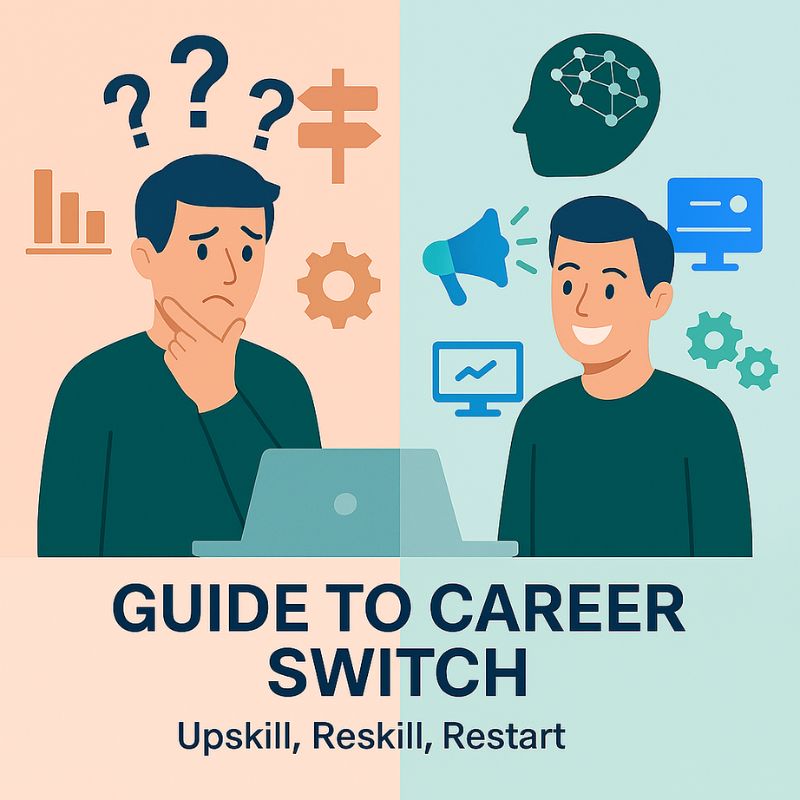
A career change can open the door to new opportunities, but it often comes with uncertainty. Whether you're feeling stuck, looking for a new challenge, returning to work, or exploring a different professional direction, developing relevant skills can help you move forward with greater clarity.
📌 At a Glance
🎯 Best For
Career changers, professionals returning to work, freelancers, and anyone exploring a new career direction.
📚 Popular Skills
AI & Automation, Data Analytics, Digital Marketing, Project Management, Cloud Computing, and Cybersecurity.
⏱ Learning Timeline
The time required varies by career path, prior experience, study schedule, and the depth of skills you want to develop.
🏆 Expected Outcome
Develop practical, relevant skills that can support career development, professional confidence, and applications for new roles.
⚠️ Common Career Change Challenges
- Feeling stuck but unsure which direction to take
- Not knowing which skills are relevant to your target role
- Balancing learning with work and personal responsibilities
- Lack of confidence when entering an unfamiliar field
- Choosing between too many courses and learning options
📈 Career Areas to Explore in 2026
If you're planning a career change, researching evolving industries and the skills they require can help you identify potential directions that match your interests and experience.
- 🤖 AI Tools & Automation
- 📊 Data Analytics & Business Intelligence
- 📈 Digital Marketing & SEO
- 📋 Project Management & Agile
- ☁️ Cloud Computing
- 🛡️ Cybersecurity
Career demand varies by country, industry, employer, and experience level. Before choosing a learning path, research current job descriptions and skill requirements in the market where you plan to work.
🚀 Career Paths to Explore as a Career Switcher
| Your Goal | Recommended Skill | Why Explore It | Explore |
|---|---|---|---|
| Analyze business data | Data Analytics | Combines analytical thinking with practical applications across many industries | Explore Course |
| Build a flexible digital career | Digital Marketing & SEO | Useful for in-house roles, agencies, freelance work, and online businesses | Learn More |
| Develop project leadership skills | Project Management & Agile | Transferable skills that can apply across a wide range of industries and teams | View Details |
| Develop modern AI skills | AI & Automation Basics | Learn how AI tools and automation can support modern workplace tasks and workflows | Explore AI Course |
| Explore a technology career | Cybersecurity Fundamentals | Build foundational knowledge around protecting systems, networks, and digital information | Start Learning |
| Build foundational cloud skills | Cloud Computing Basics | Develop knowledge of cloud technologies used across modern digital environments | Start Learning |
🗺️ Career Switch Roadmap
Switch Careers with Confidence in 6 Practical Steps
Follow this roadmap to explore a new career direction, develop relevant skills, gain practical experience, and prepare for professional opportunities.
Identify your existing strengths, professional experience, technical knowledge, and soft skills that may transfer to a new career.
Explore areas such as AI, Data Analytics, Digital Marketing, Cybersecurity, Cloud Computing, or Project Management based on your interests and career goals.
Choose a structured learning program, practice consistently, and consider relevant certifications where they are useful for your target role.
Create practical projects, case studies, or other examples that demonstrate how you can apply your new skills.
Refresh your resume, LinkedIn profile, and online portfolio to highlight relevant skills, projects, certifications, and transferable experience.
Explore relevant opportunities, connect with professionals in your target field, and continue developing your skills through practical experience.
✅ Expected Outcome
A structured approach to career transition that combines transferable experience, relevant skills, practical projects, and ongoing professional development.
🔄 Career Switch – Pros and Cons
✅ Potential Benefits
- Structured learning paths can make career exploration easier
- Relevant certifications can complement practical experience
- Role-specific learning helps focus your skill development
- Portfolio projects can demonstrate your abilities
⚠️ Things to Consider
- Career transitions require time and consistent effort
- Some courses and certification programs can be costly
- The learning curve may feel challenging when entering a new field
- Not every certification is equally relevant to every role or employer
💡 Smart Career Change Tips
- ✔ Focus on one career direction instead of trying to learn multiple fields at once.
- ✔ Build practical projects that demonstrate your abilities alongside any certifications you earn.
- ✔ Set aside consistent study time each week that fits around your existing responsibilities.
- ✔ Update your resume and LinkedIn profile as you develop relevant skills and complete projects.
- ✔ Connect with professionals and communities in your target industry to learn about real-world career requirements.
- ✔ Research current job descriptions to understand the skills employers are requesting.
- ✔ Review your learning plan regularly and adjust it as your career goals become clearer.
- ✔ Be patient with the process and focus on steady, measurable progress.
🔄 Career Switch – FAQs
Can I switch careers without prior experience?
Yes. Your existing experience may include transferable skills that can be useful in a new field. Beginner-friendly courses, practical projects, and structured learning can help you build additional knowledge for your target role.
How long does a career transition usually take?
There is no single timeline for changing careers. The time required depends on your existing experience, the complexity of the target role, the skills you need to develop, and how much time you can dedicate to learning.
Do employers value online certifications?
Relevant certifications can complement practical skills and experience, particularly when they are recognized within your industry or connected to the requirements of your target role. Projects and demonstrated ability can also be important parts of a career transition.
Which career path should I explore for long-term development?
There is no single career path that suits everyone. AI, Data Analytics, Cybersecurity, Cloud Computing, Digital Marketing, and Project Management are examples of areas you can research based on your interests, existing skills, location, and target roles.
🏁 Final Thoughts
Changing careers does not necessarily mean starting over. Your existing experience, knowledge, and transferable skills can provide a foundation for developing a new professional direction.
Whether you're exploring AI, Data Analytics, Digital Marketing, Cybersecurity, Cloud Computing, or Project Management, a structured learning plan and practical experience can help you prepare for the transition. Choose a direction that fits your goals, focus on relevant skills, and take steady steps toward your next career opportunity.
📚 Continue Learning
Share