

Women’s Career Restart: Skills & Courses
Women’s Career Restart: Skills & Courses
Disclosure: This page contains affiliate links. We may earn a commission if you purchase through them, at no extra cost to you. We only recommend products we believe are useful.
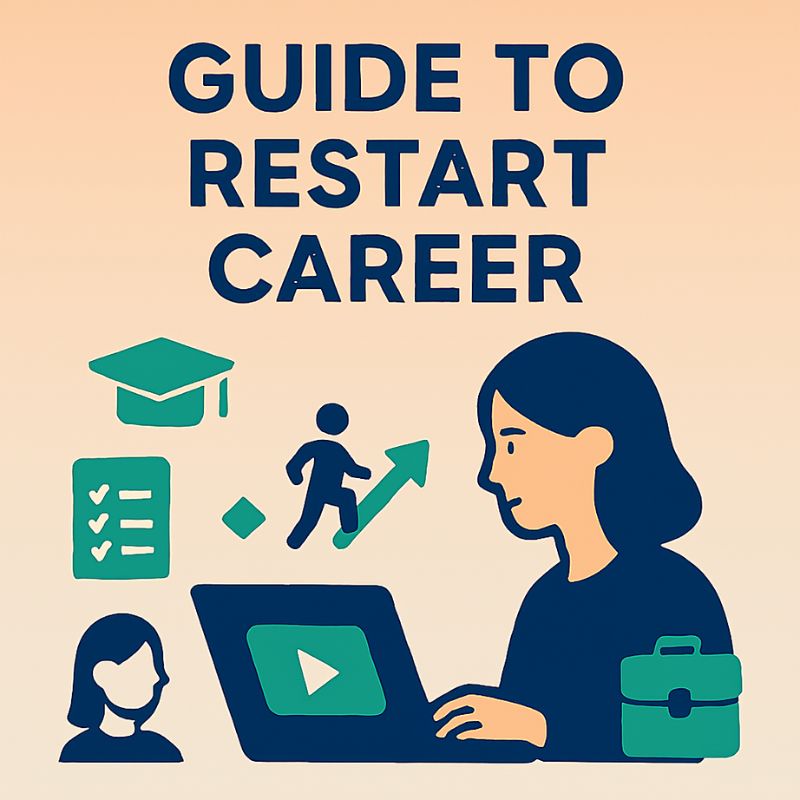
Restarting a career can feel like stepping into a new chapter, especially after taking time away from work. Whether your break was for caregiving, family responsibilities, personal growth, health, or other life circumstances, returning to work can begin with rebuilding your skills and professional confidence.
Technology, AI tools, flexible work arrangements, and changing workplace expectations have created new ways to learn and build professional skills. With a focused learning plan, practical experience, and an updated professional profile, you can take meaningful steps toward your next career opportunity.
📌 At a Glance
🎯 Best For
Women returning to work after a career break, caregiving period, maternity leave, personal transition, or a change in career direction.
📚 Skills to Explore
Digital Marketing, Project Management, AI literacy, Data Analytics, Cybersecurity, Entrepreneurship, and other digital skills.
⏱️ Learning Style
Flexible online learning with self-paced courses, practical projects, structured lessons, and optional certifications.
💼 Career Paths
Depending on your experience and goals, you can explore employment, remote or hybrid work, freelancing, consulting, entrepreneurship, or career advancement.
🚀 Key Benefits
Refresh your knowledge, develop new skills, strengthen your resume, and rebuild confidence after a career break.
🌍 Skills for a Changing Workplace
AI, digital business, data, cloud technologies, cybersecurity, project management, and digital communication are useful areas to explore.
🚩 Common Career Restart Challenges
- Feeling behind after changes in technology and workplace practices
- Lack of confidence after a long career gap
- Uncertainty about which skills to learn next
- Concern about competing with candidates who have more recent experience
- Balancing learning and job searching with family or personal responsibilities
- Uncertainty about how to discuss an employment gap
- Not knowing where to begin or which course to choose
These challenges can be addressed with a practical plan. Start by identifying your existing strengths, choose one relevant skill to develop, and gradually build evidence of your updated capabilities.
⭐ Featured Learning Paths
Project Management & Agile
Project management can be useful for professionals who enjoy planning, coordinating teams, organizing tasks, and managing projects. These skills can transfer across many industries and can complement previous professional experience.
- ✅ Develop planning and coordination skills
- ✅ Learn widely used project management concepts
- ✅ Useful for professionals returning to structured work
Digital Marketing & SEO
Digital marketing provides an opportunity to develop practical skills in areas such as content, search optimization, social media, analytics, and online campaigns. These skills can be applied in employment, freelancing, consulting, or business projects.
- ✅ Practical digital skills
- ✅ Suitable for different types of work
- ✅ Accessible learning path for beginners
🚀 Recommended Career Restart Courses
Explore learning paths that can help women refresh existing knowledge, develop new skills, and prepare for different types of career opportunities.
Project Management & Agile
Develop planning, organization, communication, and team coordination skills that can be applied across different industries.
✔ Cross-industry skills • ✔ Structured learning • ✔ Practical application Explore CourseDigital Marketing & SEO
Learn practical skills in digital marketing, search optimization, content, and online promotion for employment, freelance, or business applications.
✔ Practical skills • ✔ Multiple applications • ✔ Beginner-friendly options Explore CourseAI & Automation Basics
Build practical familiarity with AI tools and automation concepts that can support productivity and digital work across different roles.
✔ AI literacy • ✔ Productivity skills • ✔ Cross-role applications Explore CourseData Science & Analytics
Develop analytical skills that can support work involving data interpretation, reporting, business intelligence, and evidence-based decision-making.
✔ Analytical thinking • ✔ Data skills • ✔ Practical applications Explore CourseCybersecurity
Learn the fundamentals of protecting systems, networks, applications, and digital information while exploring cybersecurity as a potential technology career path.
✔ Security fundamentals • ✔ Technology skills • ✔ Continuous learning Explore CourseEntrepreneurship & Freelancing
Learn about business planning, client work, marketing, and other practical skills that can support freelancing or building an independent business.
✔ Independent work • ✔ Flexible possibilities • ✔ Business fundamentals Explore Course🗺️ Career Restart Roadmap
🔍 Step 1: Discover Your Strengths
Review your previous experience, transferable skills, interests, achievements, and preferred working style. Identify what you want to carry forward into your next career chapter.
📚 Step 2: Choose a Relevant Skill
Select one area that matches your interests and career goals, such as Digital Marketing, Project Management, AI, Data Analytics, Cybersecurity, or Entrepreneurship.
🛠️ Step 3: Build Practical Experience
Complete projects, exercises, case studies, or other practical work that demonstrates how you can apply your newly developed skills.
💼 Step 4: Refresh Your Professional Profile
Update your resume, LinkedIn profile, portfolio, and interview preparation to highlight transferable experience, recent learning, and relevant achievements.
🚀 Step 5: Explore Opportunities
Begin exploring suitable roles, freelance projects, networking opportunities, or business ideas while continuing to develop your skills.
⚖️ Career Restart: Advantages & Considerations
✅ Potential Advantages
- Learn new skills at a pace that fits your circumstances
- Refresh knowledge that may have become outdated during a career break
- Explore new industries or career directions
- Build practical evidence of your current capabilities
- Reconnect with professional communities and networks
- Combine previous experience with new digital skills
⚠️ Things to Consider
- Learning requires regular practice and consistency
- Some courses and certifications involve additional costs
- Building recent work samples can take time
- Technology and workplace requirements continue to change
- Networking and applications are important parts of a career restart
- Course completion alone does not guarantee employment
🌟 Career Restart Success Factors
🎯 Focus on One Skill
Choose one relevant skill and develop it progressively rather than trying to learn several unrelated subjects at the same time.
📂 Build a Portfolio
Where appropriate, showcase projects, practical exercises, certifications, previous achievements, and other evidence of your capabilities.
🤝 Grow Your Network
Reconnect with former colleagues, join professional communities, attend webinars, and connect with people working in your target field.
🚀 Apply as You Learn
You do not need to wait until you have mastered everything. Explore suitable opportunities while continuing to improve your skills.
💡 Smart Career Restart Tips
Returning to work does not mean starting from scratch. Your previous experience, communication skills, problem-solving abilities, industry knowledge, and professional maturity can remain valuable. The goal is to combine those strengths with skills that are relevant to your current career direction.
- ✔ Start with one relevant skill at a time.
- ✔ Use practical projects to reinforce what you learn.
- ✔ Update your resume and LinkedIn profile.
- ✔ Reconnect with professional contacts and communities.
- ✔ Prepare a clear, positive explanation of your career break.
- ✔ Explore opportunities while continuing to learn.
Consistent progress can help you rebuild confidence and create a stronger foundation for your next career step.
🔁 Career Restart – FAQs
Is a career restart possible after a long gap?
Yes. Your previous experience can still provide a valuable foundation. Updating relevant skills and building recent examples of your work can help you prepare for your next opportunity.
Do I need prior experience to start learning a new skill?
Not always. Many online courses offer beginner-level learning paths. Choose a course that matches your current knowledge and career goals.
Can I learn at my own pace?
Many online learning platforms offer self-paced courses, although the format and schedule vary by provider.
Are online course certificates recognized by employers?
Recognition varies by employer, industry, course provider, and certification. A certificate can complement your application, but practical skills and relevant experience also matter.
Can I balance family responsibilities while learning?
Flexible and self-paced courses can make learning easier to fit around personal responsibilities, although the time required depends on the course and your learning goals.
Should I choose digital marketing or data analytics?
Both can lead to different types of work. Digital marketing may suit people interested in content, communication, and online promotion, while data analytics may suit those who enjoy working with numbers, patterns, and business data.
How should I explain a career gap in an interview?
Keep the explanation clear and professional. You can briefly explain the reason for the break and then focus on your transferable experience, recent learning, skills, and readiness to return to work.
Can I switch to a completely new field?
Yes. A career change may require additional learning and practical experience, but your transferable skills can provide a starting point for moving into a different field.
📚 Summary
Restarting your career does not mean starting from zero. Your previous experience, transferable skills, and professional knowledge can become valuable strengths when combined with updated skills and practical experience.
Whether you explore project management, digital marketing, AI, data analytics, cybersecurity, entrepreneurship, or another field, choose a learning path that matches your interests, existing experience, and career goals.
Start with one focused skill, build practical evidence of what you can do, refresh your professional profile, and gradually explore opportunities that fit the type of work and flexibility you want.
📚 Continue Learning
Share